
How to layer a bed with blankets, a quilt and a throw
Three layers, three jobs. Where the quilt, the blanket and the throw belong on a bed, how far each one hangs, and how to fold a throw so it looks intentional rather than staged.

How to layer a bed with blankets, a quilt and a throw comes down to three moves. The quilt goes on first and covers the whole bed, corner to corner. The blanket goes over it, folded across the lower half or two thirds, and does the temperature work. The throw goes last, at the foot, folded once or twice. Each layer covers less than the one beneath it.
The order, from the mattress up
Fitted sheet, flat sheet if you use one, quilt, blanket, throw. What makes a layered bed look considered rather than piled is a single rule: every layer above the quilt shows less of itself than the layer below. The quilt reaches the headboard. The blanket starts around the middle. The throw sits in the last third. That stepping is the whole trick.
The layers are not interchangeable. One covers, one warms, one finishes. Buy a third throw when the bed needs a blanket, and no amount of folding will fix it.
| Layer | Where it sits | What it does | How much shows |
|---|---|---|---|
| Quilt | Over the whole bed, hanging past the mattress on three sides | Sets the base colour, holds the shape of the bed | Most of it |
| Blanket | Across the lower half to two thirds, or folded back at the top | Adjustable warmth. The layer you pull up at 3am | A wide band |
| Throw | The last third of the bed, folded, or over a bench or end rail | Texture and contrast. Also the piece you carry to the sofa | A narrow band |
The quilt: the layer that sets the bed
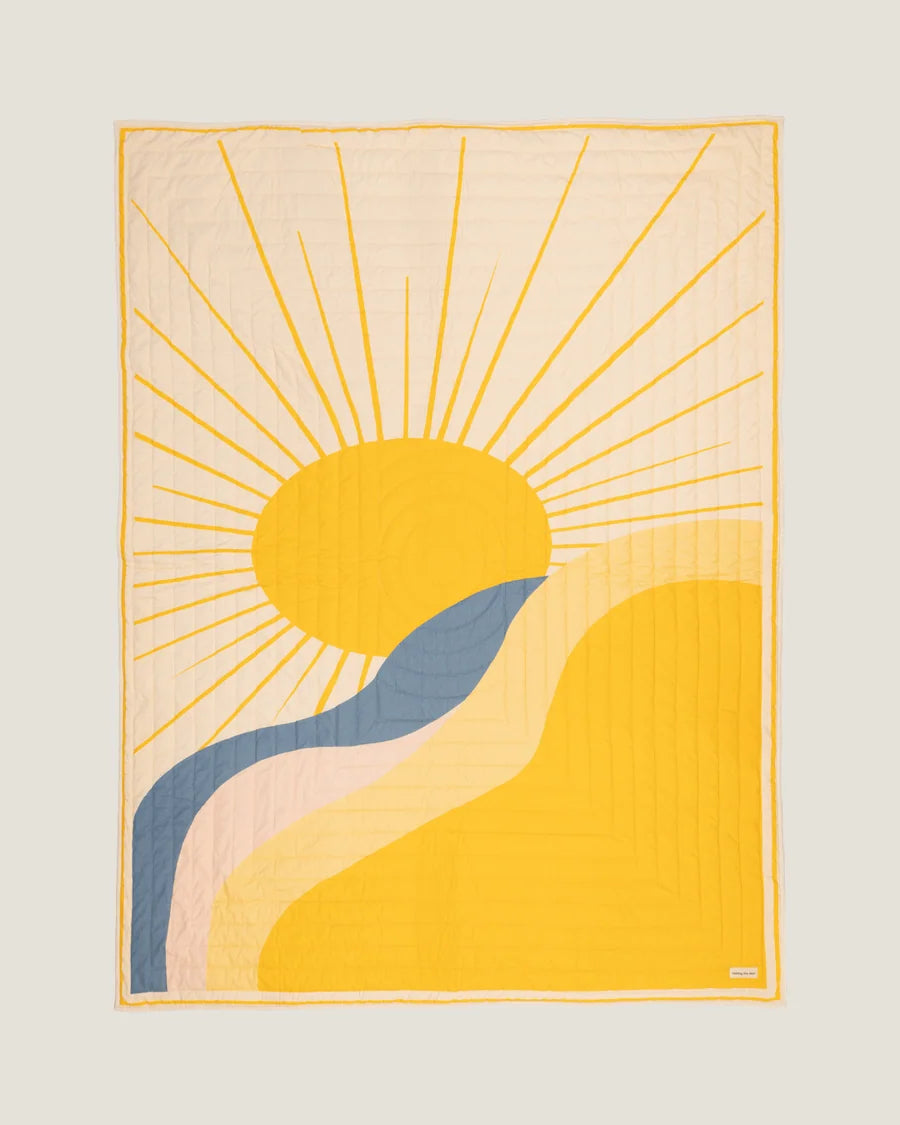
A quilt is stitched through, so it lies flat instead of puffing. A folded edge stays folded and a turned-back corner holds its line rather than slumping by lunchtime. What is inside decides how much room the layers above have. The Terra Versatile Quilt is a 100% organic cotton outer over a lightweight pre-filled construction, which gives gentle warmth without bulk. That is what a base layer needs, so it can cover the bed without swallowing what goes on top.
Two ways to dress a quilt:
- Pulled to the headboard, folded back. Bring the quilt right up, then turn the top edge back on itself so a band of sheet shows, pillows in front of the fold. This reads formal, and it reads made.
- Flat, with pillows on top. The quilt runs under the pillows to the headboard, nothing turned back. Faster, and better for a bed you get in and out of twice a day.
The drop matters more than people expect. Hold the quilt against the side of the bed before you make it up and see where the edge falls. One that stops level with the mattress reads as short. Frames and mattress depths vary too much for a single number to be worth quoting, so measure the bed in front of you. The quilts are also made to work away from the bed, as a picnic blanket or an outdoor layer, which is a fair test of whether a piece is versatile or only large.

The blanket: the layer you actually adjust
This is the layer most beds are missing. A quilt and a throw give one temperature and one accent. A blanket between them gives a bed you can tune, and layering a quilt and a blanket together is mostly a question of how far up the bed the blanket comes.
- Across the foot, roughly the bottom third. A band of warmth over your feet you can pull up without waking properly. For mild nights.
- Lower two thirds, top edge just below the pillows. Covers you from the shoulders down once you are lying under it. The most useful setting for most of the year.
- Full length, folded back with the sheet. The blanket runs the whole bed, its top edge turned down over the quilt to show the reverse face. For genuinely cold nights.
Whichever you choose, let a hand's width of quilt show along each side below the blanket. Two textiles hanging to exactly the same depth reads as an accident rather than a decision.

Size is what makes the middle position work. The oversized organic cotton blankets run 200 × 160 cm — a full bed layer rather than an accent, and enough cloth to fold the top edge back and still be covered from the shoulders down. They are machine washable and described as softening with every wash, so this is not a layer to be precious about. For the alpaca and the blends, check the care label on your piece; as general laundry practice, different fibres rarely want identical treatment.
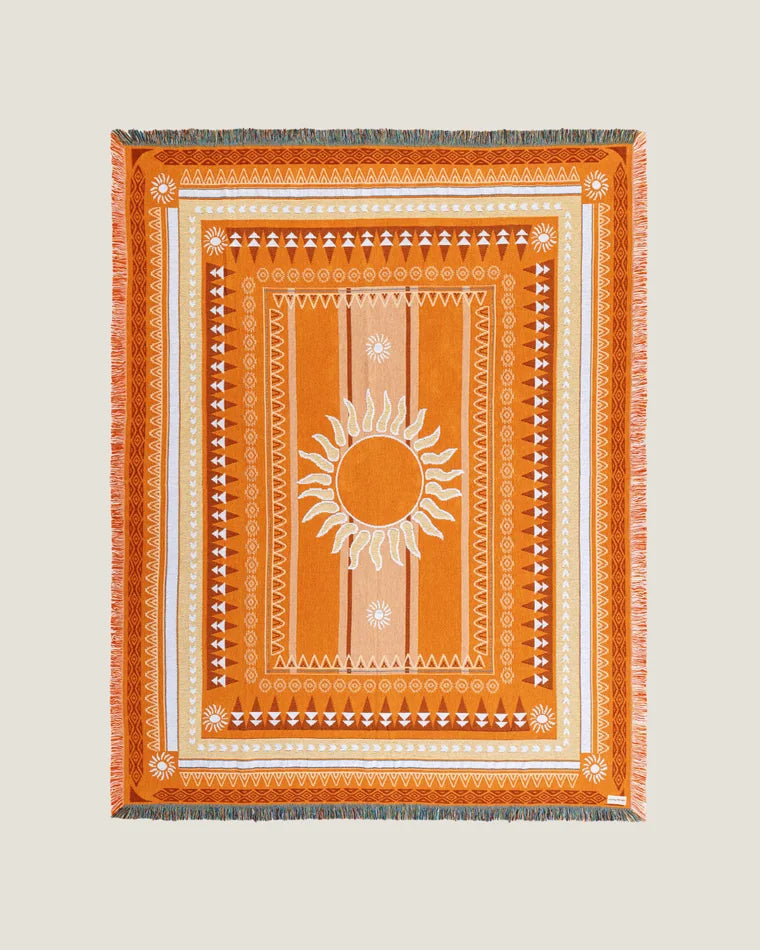
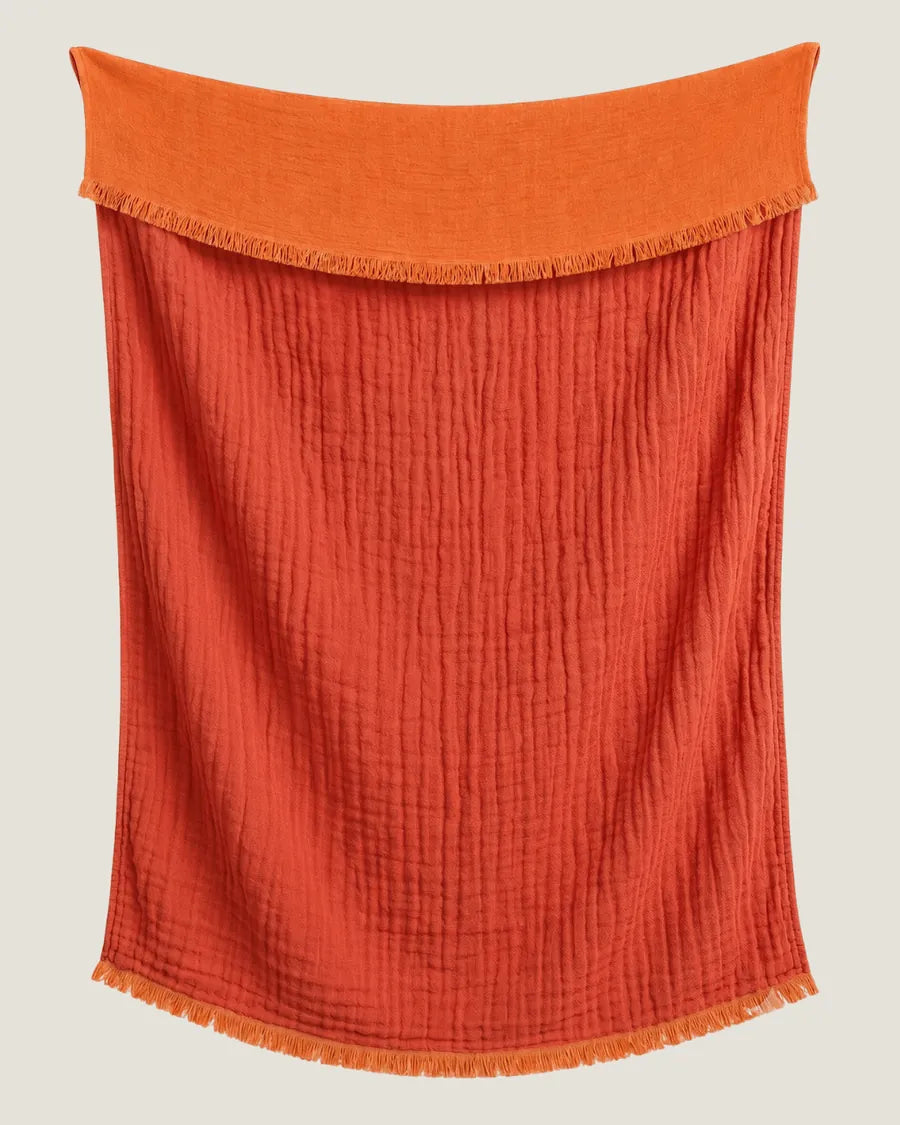
Weave changes how a blanket behaves once it is on the bed. A flat jacquard weave gives an even surface and a crisp fold. A waffle weave is dimensional: the raised cells give warmth without weight and round the edge of a fold rather than sharpening it. The Turkish waffle throws are 150 × 180 cm, woven in Turkey from 100% organic cotton, without synthetics or harsh finishes.
Where to put a throw on a bed
At the foot. Almost always at the foot. It is the smallest and most decorative layer, and it still has a structural job: to break the expanse of quilt with a different texture so the bed does not read as one flat plane.
- Straight across the foot. Folded lengthways in thirds, parallel to the end of the bed, overhanging evenly. The default, and it suits any bed.
- Across one corner, on the diagonal. Looser, and better on a bed without a footboard.
- Over a bench or end rail. Off the bed entirely, and the right answer when the quilt already carries pattern.
- Perfectly centred and mirrored. The one that fails. It reads as a hotel display rather than somewhere a person sleeps.
How to fold a throw at the end of a bed
- Lay it out flat, face up, and smooth it with your palm. Use the floor if the bed is already made.
- Fold it lengthways in thirds, not halves. Thirds read as a real layer; halves read as a towel.
- Set it across the bed, closed fold facing the headboard, loose edges towards the foot.
- Slide it up until the top edge sits about a third of the way up the mattress.
- Even the overhang: about a hand's width past the mattress each side, never touching the floor.
- Leave one soft break near a corner. A throw with no give in it looks staged.
Size is easier to judge against real dimensions than a rule of thumb. A waffle throw at 150 × 180 cm folds into a deep band across the foot with overhang to spare. A cotton blanket at 200 × 160 cm wants the middle position instead, and is mostly wasted in the last third.

What the layers are made of
| Piece | What it is | What that gives you on a bed |
|---|---|---|
| Terra Versatile Quilt | 100% organic cotton outer, lightweight pre-filled construction | Gentle warmth without bulk, so the base does not swallow what sits on it |
| Solara Versatile Quilted Blanket | 100% organic cotton with a soft cotton filling, reversible | Pattern one way, calm neutral the other. Quiet face up under a strong throw |
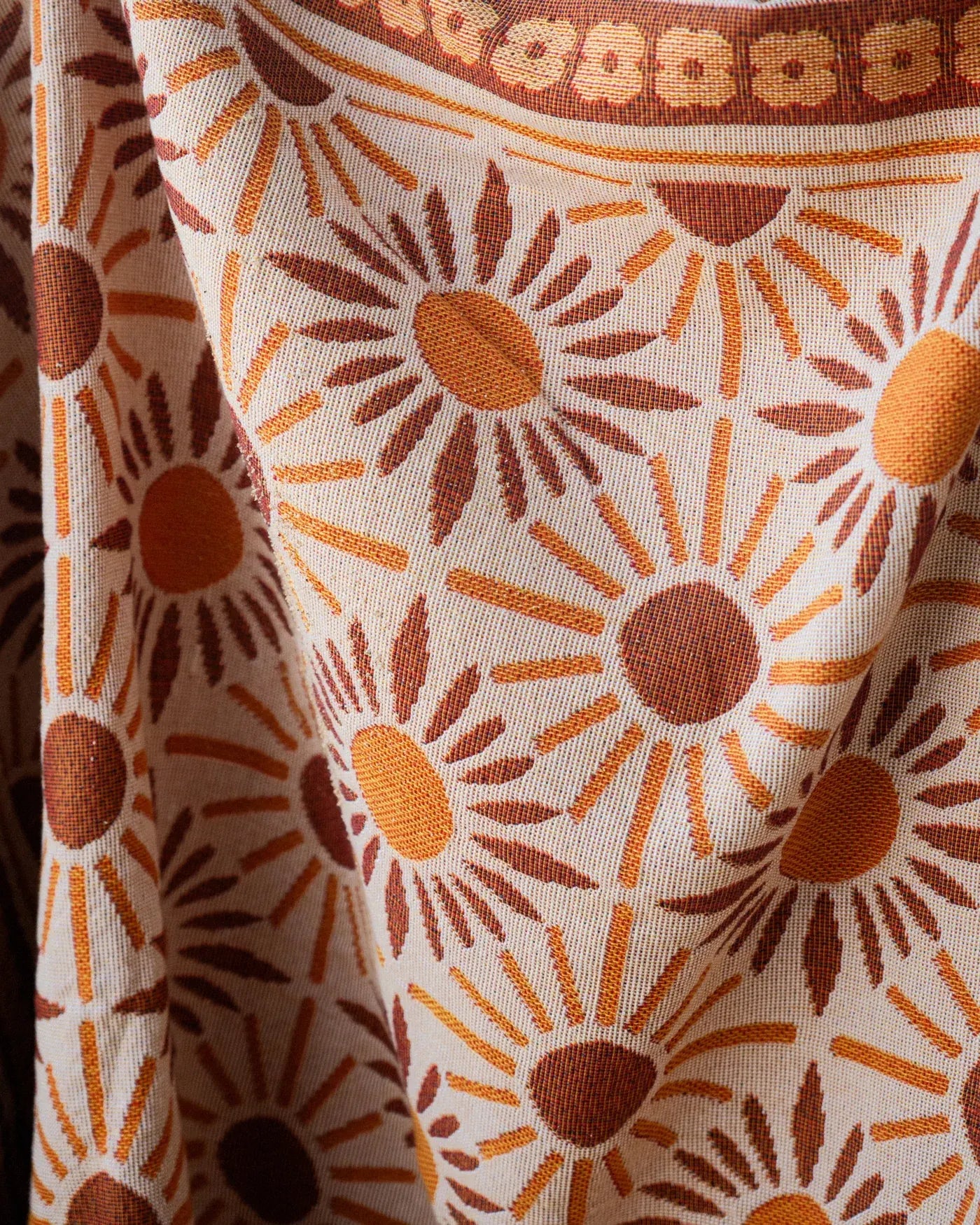
| Oversized jacquard cotton blanket | 100% organic cotton, 200 × 160 cm, jacquard woven not printed | Wide enough for the middle position, quilt still showing each side. Machine washable |
| Turkish waffle oversize throw | 100% organic cotton, 150 × 180 cm, waffle weave, woven in Turkey | Warmth without weight, and a texture that reads across a room |
| Alpaca wool throw | Ultra-soft alpaca and recycled wool, woven in Peru in small batches with low-impact dyes | Lightweight, breathable warmth. Move it to the middle position in winter |
| Aeraloom bamboo cotton throw | 75% organic cotton and 25% bamboo, jacquard woven | Textured and lightweight, made for year-round use |
Colour: keep the base quiet
Quietest at the bottom, interest building upward. A quilt in a soft neutral gives everything above it room to work, which is what the Natural shades are for at the base of a stack. Put the mid tone in the blanket and the strongest colour in the throw, where it covers least and costs least if you change your mind. A reversible quilt helps: the neutral face carries the bed on days the pattern is too much.
Then repeat the accent once somewhere else in the room. A cushion, the edge of a rug, the spine of a book on the side table. One repetition makes a colour look chosen. Three makes it look matched.
Layering a bed for summer
Do not remove the layers. Move them. The structure that works in July works in January. What changes is which fibre sits against you and how much of it lies over your body.
- Send the quilt to the foot. Fold it in thirds across the bottom and sleep under a sheet and a cotton blanket. The visual weight stays at the foot and the warmth comes off your torso.
- Reach for the pieces made for year-round use. The cotton blankets, waffle throws and alpaca throws are all described as breathable and lightweight rather than seasonal, so the change is position, not replacement.
- Let the top layer be the light one. A bamboo cotton throw at 75% organic cotton and 25% bamboo puts jacquard texture at the foot without much weight over you.
- Two layers instead of three. Keep the stepped proportions and a quilt plus a throw still reads as layered.
Come winter you reverse it. The quilt goes back over the whole bed and the warmest thing you own moves to the middle, where it lies over your body rather than your feet. The alpaca wool throws are woven in Peru from ultra-soft alpaca and recycled wool, in small batches with low-impact dyes, made for lightweight breathable warmth rather than dead weight — the right character for a layer with a quilt already under it.

Four things that quietly ruin a layered bed
- Matching sets. If all three share a colour and a weave, the eye reads one object. Vary the texture at minimum.
- Everything hanging to the same depth. Stagger the drops: quilt lowest, blanket above, throw shortest.
- Hiding the fold under the pillows. The turned-back edge of a quilt is the best part of it. Let it show.
- Too many pillows. Three textiles plus a wall of cushions makes a bed nobody wants to unmake.
Where to start if you are building this from scratch
Start with the middle layer. If your bed already has a quilt or a doona you are happy with, do not replace it. Add the blanket. It changes how the bed feels to sleep in as well as how it looks, and it is used every night rather than admired from the doorway.
Choose a size that covers you from shoulders to feet with room to spare, a weave you like the look of folded, and a colour a shade or two off your quilt rather than a match for it. The full range of blankets and throws is where to compare weaves and compositions side by side, and since duties and taxes are included and shipping is free worldwide, the figure on the page is the figure you are comparing.
Common questions
Where should a throw go on a bed?
At the foot, in the last third of the bed. Fold it lengthways in thirds and lay it across the bed with the closed fold facing the headboard, so the top edge sits about a third of the way up the mattress. Let it overhang about a hand's width on each side, and never let it touch the floor.
Do you really need a blanket if you already have a quilt and a throw?
You do if you want a bed you can adjust. A quilt gives you one temperature and a throw is too small to change it. The blanket in the middle is the layer you pull up when the night turns cool and push down when it does not, and it is the layer most beds are missing.
How do you layer a bed for summer without it looking bare?
Move the layers rather than removing them. Fold the quilt in thirds across the foot of the bed and sleep under a sheet and a cotton blanket. The organic cotton blankets, the Turkish waffle throws and the alpaca throws are all described as breathable, lightweight and made for year-round use rather than one season, so the honest summer change is position rather than replacement. Drop to two layers instead of three, keep the stepped proportions, and the bed still reads as layered.
How big should a throw be for a queen bed?
Measure your own bed rather than working from a standard, since frames and mattress depths vary. Two real reference points: the Organic Cotton Turkish Waffle Oversize Throws are 150 x 180 cm, which folds into a deep band across the foot with overhang on each side, and the oversized organic cotton jacquard blankets are 200 x 160 cm, which is large enough to want the middle position on the bed rather than the last third.
Does the blanket go over or under the quilt?
Over. The quilt is the base layer that covers the whole bed and sets the colour; the blanket sits on top of it, folded across the lower half or two thirds so a band of quilt still shows along each side. If you tuck the blanket underneath, you lose the layered look and the ability to add or remove warmth without remaking the bed.
More from the journal.
 alpaca
 Buying guide
 alpaca blankets