
Cotton vs wool blanket: choosing one for your climate
Cotton conducts warmth away and washes easily. Wool traps still air and keeps insulating when it is damp. Which one belongs on your bed depends less on the season than on what your bedroom does at three in the morning.

Cotton for heat and humidity, wool for cold and damp. The cotton vs wool blanket question really turns on what your bedroom does overnight, not on what the season is called. Cotton moves heat away from the skin and washes easily. Wool holds still air and keeps insulating when the air is wet. Most homes end up wanting both.
Cotton vs wool blanket: what the fibres actually do
The comparison is usually framed as warm versus cool, which is why it gets answered badly. Both fibres are warm. They arrive there by different routes, and the route decides which one suits your climate.
Cotton is a cellulose fibre that moves heat readily. Lay a cotton blanket against your skin and it draws warmth outward before it settles — that first cool touch is heat leaving you, not the fabric being cold. Once blanket and body have reached the same temperature, the warmth you feel comes from air held between the yarns rather than from the fibre itself. This is why weave matters so much in cotton, and why two cotton blankets of the same weight can behave quite differently.
Cotton also drinks. It takes moisture into the fibre wall and holds it there, which is welcome early in a warm night and less so later, once the cloth has gone slightly damp and stays that way. In dry heat that is a feature, because the moisture evaporates and cools you. In humid heat it is the whole problem.
Wool works the other way. Its fibres are crimped and springy, so they hold a great deal of still air, and still air is the thing that actually insulates. Wool also carries moisture as vapour, drawing it into the core of the fibre while the surface still feels dry. That property is why wool stays warm in damp cold, where a wet cotton blanket is simply a cold wet blanket.

Where alpaca sits in this
Not all wool behaves the same. Alpaca fibre is smoother and straighter than sheep's wool, with a longer staple and far less lanolin, so it falls in soft folds rather than springing back. Our alpaca wool throws are woven in the highlands of Peru in small batches, from ultra-soft alpaca blended with recycled wool, and finished with low-impact dyes in earthy, timeless tones. The product pages describe them as lightweight, breathable warmth that adapts across seasons, and as pieces that grow softer with use. A throw such as the Warm Dune is the layer to reach for when you want warmth without much weight sitting on you — over a bed, across a lap, on a sofa in a room that never quite holds its heat.
Cotton and wool side by side
| Consideration | Organic cotton | Alpaca wool |
|---|---|---|
| Fibre | 100% organic cotton | Ultra-soft alpaca blended with recycled wool |
| Where it is woven | Turkey, on the Turkish waffle throws and towels | Peru, in small batches |
| How it holds warmth | Air between the yarns, so weave and size do the work | Air held by the crimp of the fibre itself |
| How the maker describes it | Soft, breathable and lightweight; comfortable for year-round use | Lightweight, breathable warmth that adapts across seasons |
| In humid heat | The one to reach for, particularly in a waffle or open weave | More warmth than a humid night usually calls for |
| In damp cold | Wets out, and the weave loses the air that was insulating you | Keeps insulating while damp |
| Against bare skin | Softens beautifully with every wash, by the maker's own description | Described as ultra-soft; smoother and straighter than sheep's wool |
| Dyes and finishes | Low-impact dyes; the Turkish pieces are made without synthetics or harsh finishes | Low-impact dyes |
| Care | The organic cotton blankets are listed as machine washable for easy care | No wash routine is published, so check the care label on your piece |
| Its job in the house | The layer you sleep under for most of the year | The layer you add when the room drops |
Match the blanket to your climate, not the calendar
Seasons are a poor guide because they describe the outdoors. What matters is the temperature of the room you sleep in at three in the morning, and how much water is in the air.
Humid heat
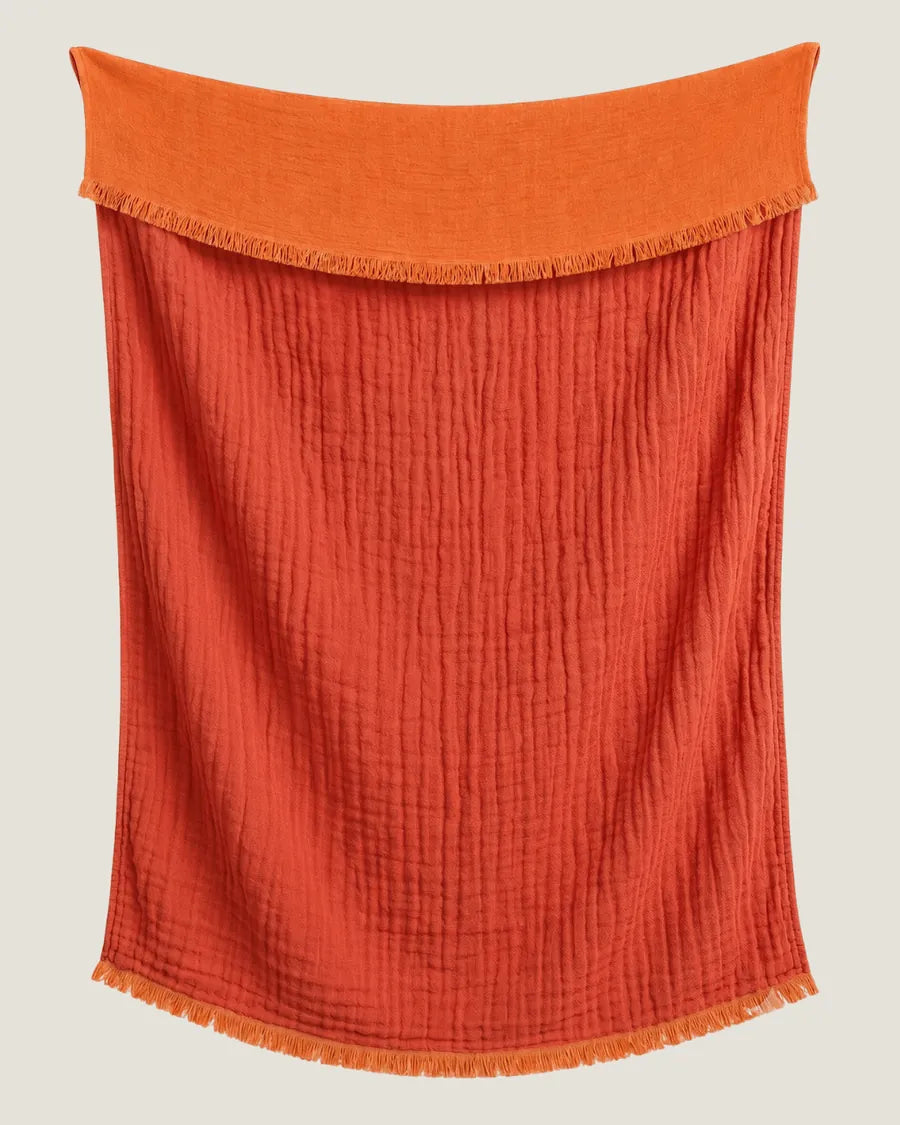
Darwin, Brisbane, Singapore, a Sydney February. The air is already carrying nearly as much moisture as it can hold, so sweat has nowhere to evaporate to. Wool is the wrong answer here, and so is any dense cotton. What works is a light, open cotton laid over the body rather than tucked in, so air can move underneath it. Waffle constructions suit this climate, because the raised grid lifts most of the cloth off the skin and leaves channels along the surface for air to travel. Among our waffle blankets, the Turkish Waffle Oversize Throw in Sea Mist is woven in Turkey from 100% organic cotton, measures 150 × 180 cm, and is described on its product page as warmth without weight.
Dry heat with cold nights
Inland Australia, the Mediterranean, high desert. Afternoon and dawn are effectively two climates, and one blanket cannot serve both ends of that swing. Two light layers beat one heavy one: a cotton blanket you sleep under from the start, and a wool throw folded at the foot of the bed that you pull up when the room drops. The air gap between two layers insulates as much as either layer does on its own.
Temperate with real seasons
Melbourne, Auckland, much of Britain. This is the climate that genuinely wants both fibres, because a single blanket is being asked to cover two opposite ends of the year. The organic cotton blankets are described on their own product pages as soft, breathable and lightweight, and comfortable for year-round use, which is the profile that suits a bed through the mild and warm months. An alpaca throw then handles the coldest weeks and every evening on the sofa. One blanket doing both jobs will be slightly too warm for half the year and slightly too cold for the other half.

Cold and damp
Northern Europe, coastal Canada, a Tasmanian winter, anywhere the cold arrives with rain. Wool is the better fibre here. Damp cold defeats cotton: the fibre wets out, the weave loses its air, and the blanket starts pulling heat away from you instead of holding it in. Wool keeps working. If the house is heated and dry, though, the calculation shifts back towards cotton faster than most people expect.
The indoor climate is the real climate
A sealed, heated apartment in a cold city is a mild climate. An unheated weatherboard house in a mild city is a cold one. Before choosing a fibre, work out what your bedroom does overnight: whether the heating runs through, whether the windows sweat, how quickly the room drops once the sun goes. Condensation on the glass is the useful signal, since it tells you the room is holding more moisture than it can shed.
Weave, size and blend decide more than fibre
Fibre sets the ceiling on how a blanket behaves. Construction decides where within that range it lands, and it is the part most comparisons leave out.
- Open weave. Space between the yarns lets air and moisture pass. A loosely woven cotton is a summer blanket; the same yarn woven densely is a winter one.
- Waffle and honeycomb. A dimensional waffle holds air within its own structure, the way wool crimp does. It is the closest cotton comes to behaving like wool.
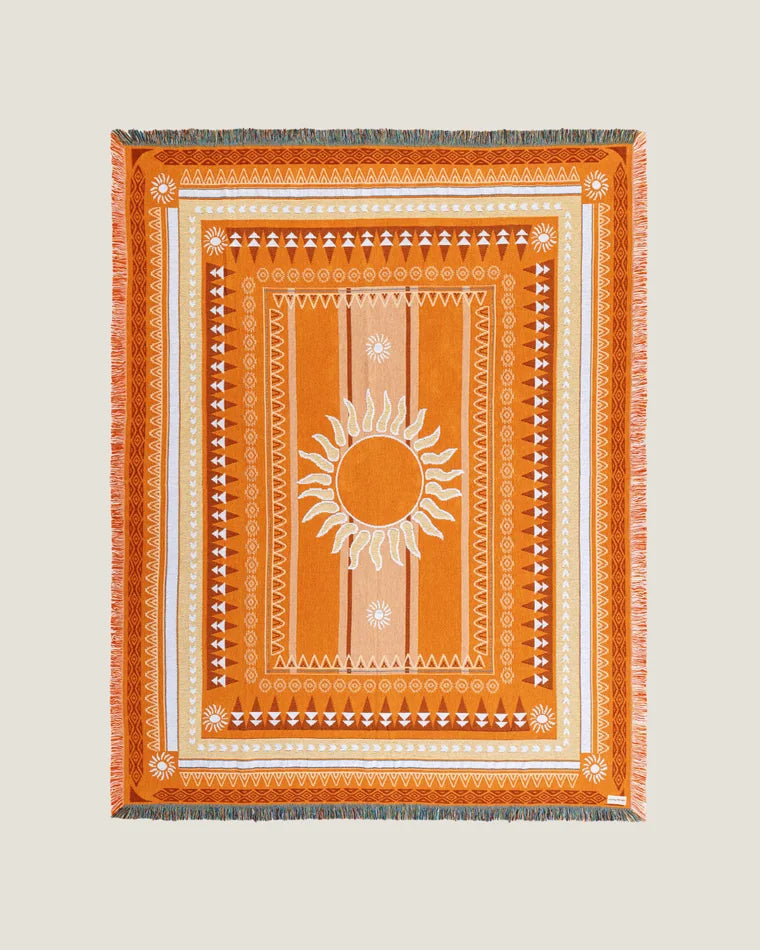
- Size. Coverage changes how a blanket performs as much as weight does. The Aura Sky blanket is 200 × 160 cm, wide enough to go around two people on a sofa or to serve as a picnic rug. The Sea Mist waffle throw is 150 × 180 cm, longer than it is wide, which suits lying along a bed.
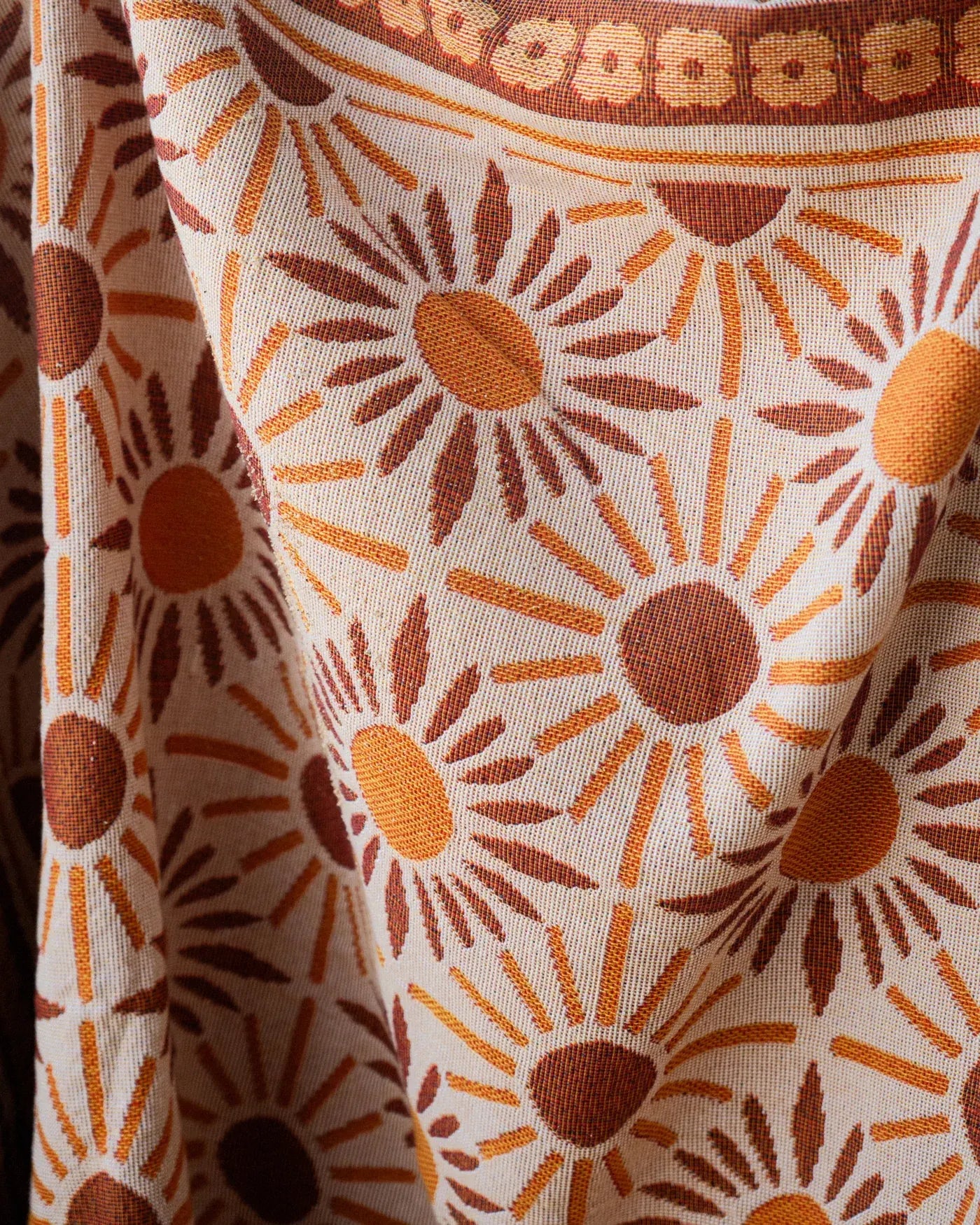
- Woven, not printed. On the jacquard cotton pieces the pattern is built into the cloth rather than printed on the surface, which the product pages credit with lasting colour.
- Blends. Our bamboo cotton throws put cotton and bamboo on the same loom: the Aeraloom jacquard throws are 75% organic cotton and 25% bamboo, and the Airweave Herringbone is 60% cotton and 40% bamboo. They are described as lightweight, breathable and comfortable year round, which places them at the cotton end of this comparison.

If you sleep hot
Hot sleepers are usually not fighting warmth so much as trapped moisture. The blanket feels stifling because the humid air sitting right at the skin has nowhere to go, and no fibre solves that on its own.
Three things help, in rough order of how much difference they make. First, reduce contact — a blanket with texture touches less of you than a flat one does, which is the practical argument for a waffle. Second, drop the weight before you change the fibre, because a lighter cotton often answers the problem that a different fibre would not. Third, keep it clean, since cotton holds the moisture and oils it absorbs. Our organic cotton blankets are listed as machine washable for easy care, which matters to a hot sleeper more than to anyone: a blanket you can wash without ceremony is a blanket you will actually wash.
Living with each fibre
Cotton is the forgiving one. The organic cotton blankets are listed as machine washable for easy care, and as softening beautifully with every wash. That second phrase is the useful part: washing cotton is not a compromise, it is part of how the cloth comes good.
Alpaca asks for more thought. No wash routine is published for the alpaca throws, so check the care label on your piece before it goes anywhere near water. As general practice with animal fibres — textile convention rather than an instruction for these particular throws — heat and mechanical action are what cause felting, so cool water, minimal agitation and drying flat away from direct heat are the usual advice, and airing in shade with moving air freshens a piece between washes. Fold wool rather than hanging it, and shake it out before it goes back into use so the fibres recover their loft.
So which blanket should you buy
If you are buying one blanket and you live anywhere with a mild-to-warm half of the year, the cotton vs wool blanket decision lands on cotton. It covers more of the calendar, it tolerates washing, and it will not defeat you in a heatwave. Start with an oversized jacquard piece such as the Aura Sky blanket at 200 × 160 cm, or a waffle throw if you would rather have texture doing some of the work.
If your winters are genuinely cold, or your nights drop hard after warm days, add alpaca as a second layer rather than replacing the first. A light throw over a cotton blanket handles more conditions than any single heavy blanket can, and you can subtract half of it at two in the morning.
If you already know your climate and want to see what is there, the full blanket collection holds both fibres. Shipping is free worldwide and duties and taxes are included in the price shown.
Common questions
Is cotton or wool better for a blanket?
Neither is better in general, only better for a set of conditions. Cotton suits warm and humid climates because it moves heat away from the skin, breathes when the weave is open, and washes without fuss. Wool suits cold and damp climates because its crimped fibres trap still air and it keeps insulating even once it has taken on moisture. If your year has both a warm half and a cold half, the practical answer is a 100% organic cotton blanket on the bed and an alpaca throw to layer over it.
What is the best blanket for hot sleepers?
A light, openly woven cotton, and preferably one with texture. Hot sleepers are usually dealing with trapped humidity rather than raw warmth, so the goal is to let moisture escape and to reduce how much fabric sits flat against the skin. A waffle or open plain weave lifts most of the cloth away from the body and leaves channels for air. Dropping the weight of the blanket helps more than switching fibre, and the organic cotton blankets are listed as machine washable for easy care, which makes keeping one clean straightforward.
Can you use a wool blanket in summer?
In a dry summer with cold nights, yes, as a second layer you pull up after midnight rather than something you sleep under from the start. In a humid summer, no. Wool holds too much still air for that, and there is nowhere for the moisture to go. The alpaca throws suit the first case: their product pages describe them as lightweight, breathable warmth that adapts across seasons, which is the behaviour you want from a layer that goes on and comes off again.
Is a cotton throw or a wool throw better for a sofa?
For a sofa, wool usually has the edge. A sofa throw is used in short stretches, often in the evening once a room has cooled, so warmth for very little weight matters more than how easily it washes. The alpaca throws suit that job: woven in Peru from ultra-soft alpaca and recycled wool, in small batches, and described as lightweight warmth that adapts across seasons. Cotton is the better choice if the throw doubles as a picnic rug or a beach layer, and a piece such as the Aura Sky blanket is 200 × 160 cm and listed as machine washable for easy care.
Which blanket fibre works year round?
Of the two, cotton — not because it is warmer, but because it is the easier one to build on. The organic cotton blankets are described on their own product pages as soft, breathable and lightweight, and comfortable for year-round use. That works on its own through the mild and warm months, and in winter it becomes the base layer under something warmer. Building warmth in layers is more flexible than owning one heavy blanket, because two lighter layers trap insulating air between them and either one can be removed when the room changes overnight.
More from the journal.
 bedding
 alpaca
 Buying guide