
How to Store Blankets in Summer (And What to Put on the Bed Instead)
Clean, dry, loosely folded and breathing: that is what decides whether a blanket comes out of storage in good condition. Here is the method for cotton and wool, and the lighter layers to put on the bed in its place.

How to store blankets in summer, in short: wash or air each one, and make sure it is completely dry. Fold it loosely with the fringe tucked in, wrap it in cotton, and keep it in a breathable bag somewhere cool, dark and dry. No plastic tubs. No vacuum bags for wool. Then put something lighter on the bed.
That is the whole method. The reasoning behind each step is what stops a blanket coming back out smelling of cupboard, creased along last year's lines, or holed.
How to store blankets in summer: the short version
- Clean it first. Not because it looks dirty. Because of what is on it that you cannot see.
- Dry it completely. Not almost. Damp and fibre shut in the dark is what the rest of this list guards against.
- Fold loosely, or roll. Tight folds become permanent folds.
- Wrap it in something that breathes. A cotton pillowcase, a cotton storage bag, an old sheet.
- Choose the cupboard carefully. Cool, dark, dry, and stable in temperature.
- Look at it once, mid-season. Two minutes in the middle saves a blanket.
Timing follows the hemisphere, not the calendar. The signal is the same either way: you have not reached for it in a fortnight, and you push it off the bed at midnight.
Clean before you store, even when it looks clean
A blanket that has been on a bed since autumn carries skin oils, sweat salts, hair product, dust and possibly the ghost of a spilled cup of tea. None of it is visible. Both reasons it matters are.
The first is smell: organic residue plus months in a still, dark cupboard is how a blanket develops that flat, sour cupboard odour. The second is moths. Clothes moth larvae feed on protein fibres, and body soil is what draws them to one part of a textile rather than another. A clean wool throw is a less appealing place to lay eggs.
Organic cotton, bamboo cotton and Turkish weaves
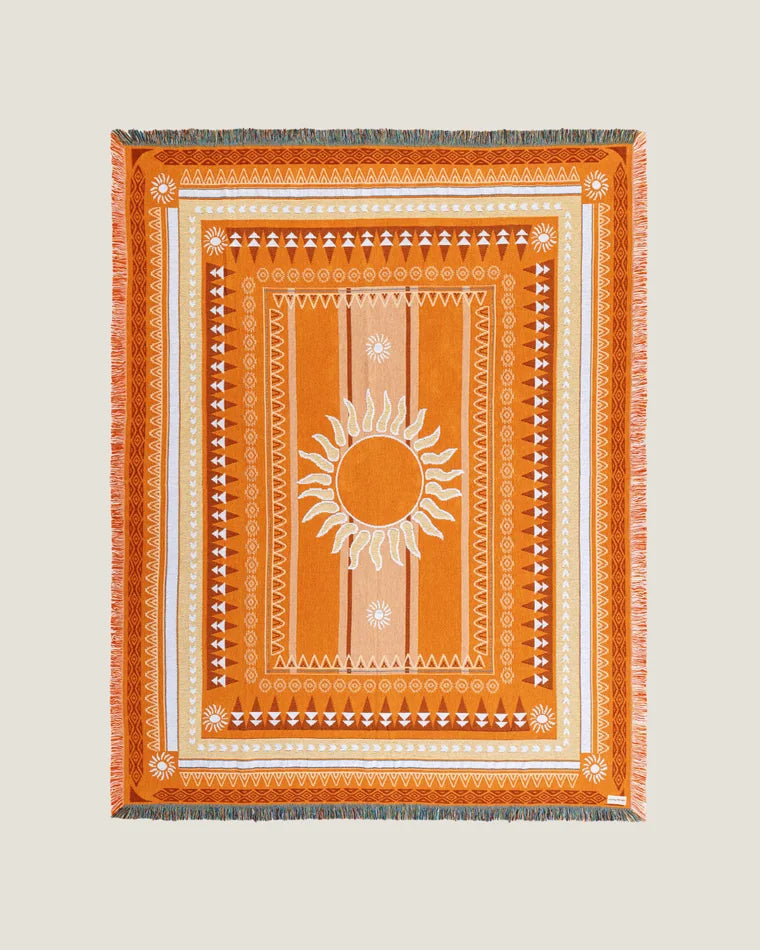
These are the straightforward ones. Our organic cotton blankets are 100% organic cotton, jacquard woven rather than printed, and the oversized pieces measure 200 x 160 cm, worth knowing before you decide what fits in a bag and what needs a shelf of its own. They are machine washable and they soften with every wash, which is the argument for washing one on the way in rather than on the way out.
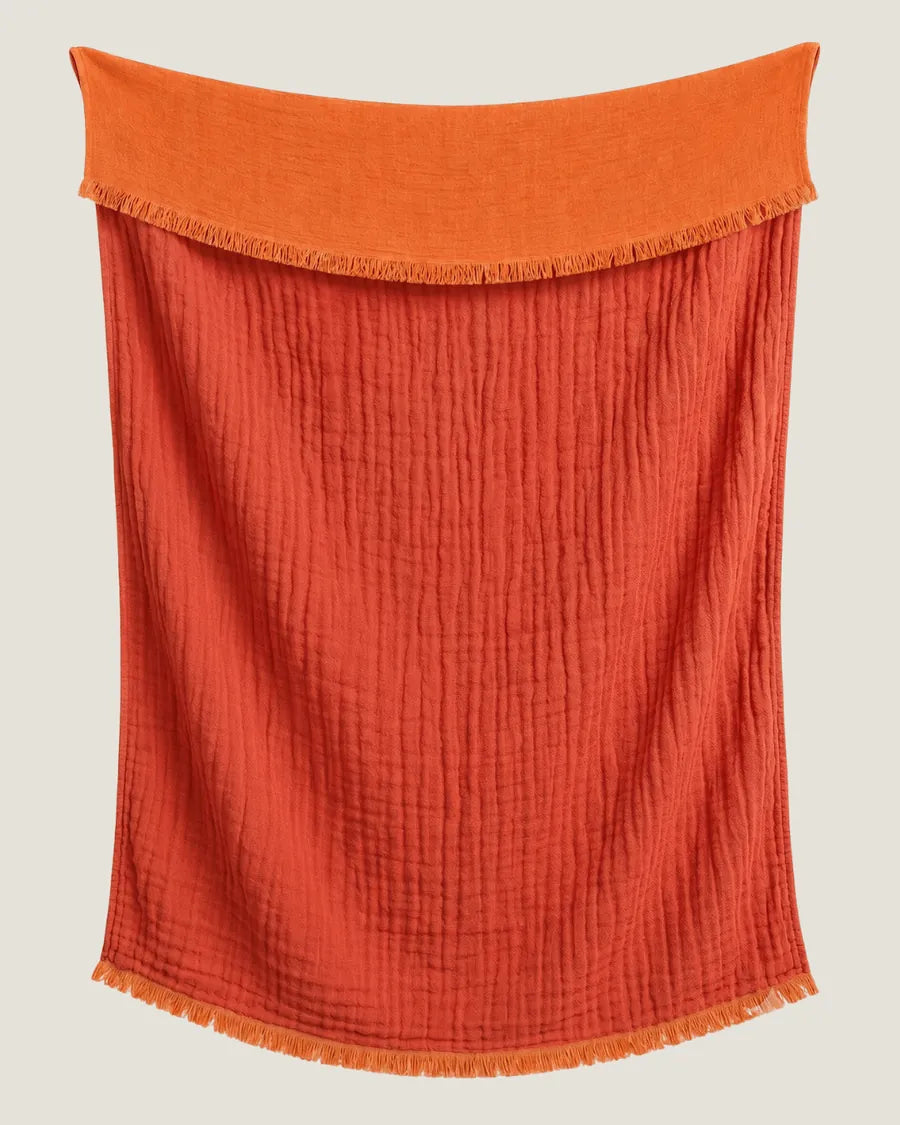
The Turkish collection is woven in Turkey from 100% organic cotton and made without synthetics. The jacquard towels are 100 x 200 cm, finished with low-impact dyes, and their smooth, flat weave is highly absorbent yet compact, so they fold down to almost nothing. The waffle throws are 150 x 180 cm, with a dimensional weave that gives warmth without weight. The bamboo cotton throws are blends, and the ratio moves around: the Aeraloom is 75% organic cotton and 25% bamboo, the Airweave herringbone 60% cotton and 40% bamboo, the Whisperwind 75% bamboo and 25% cotton. Worth knowing which one you have.
Check the care label on your piece before you wash anything. Where a label allows a machine wash, general laundry practice with cotton, not an instruction for any particular throw, is a gentle cycle, a line dry in the shade, and no fabric softener, which coats the fibre and works against the way cotton softens on its own. Wash a fringed throw inside a pillowcase, and dry it longer than you think: cotton feels dry at the surface long before the hem and the fringe are.
Alpaca and wool
Wool asks for less washing, not more. Unless a wool throw is actually soiled, airing it is enough: a few hours outdoors in the shade with a breeze, turned once. Our alpaca wool throws are woven in Peru from ultra-soft alpaca and recycled wool, in small batches, finished with low-impact dyes. A piece made that way earns the extra minute.
If one does need washing, check the care label on your piece first. General practice with wool, not an instruction for any particular throw, is cool water, minimal agitation, no wringing, and drying flat rather than hanging. Wet wool is heavy, and it will stretch itself out of shape on a line.

How to store wool blankets without moths
Moth damage is not random. It happens to wool, alpaca included, stored dirty, undisturbed, and somewhere dark and still for months. Remove any one of those three and the problem becomes much harder to have.
- Start clean. Covered above. It is the step the rest of this list depends on.
- Vacuum the storage space itself. Wardrobe corners, the underside of shelves, the skirting behind a drawer unit. Eggs and larvae live in lint.
- Use cedar or lavender, but know what they are. Deterrents, not treatments: they discourage adult moths from settling and do nothing about larvae already in the fibre. The scent does not last, so refresh the cedar or replace the lavender.
- Think twice about mothballs. Naphthalene is a pesticide, and its smell stays in fibre, on something you intend to sleep under.
- Disturb the pile occasionally. Moths want stillness. Unfolding and shaking a stored blanket mid-season is a control measure, not just a check.
- If you suspect an infestation, one general household approach is to seal the piece in a bag, freeze it for several days, then wash or vacuum thoroughly. That is a response to a problem, not a substitute for storing things clean.
An airtight container is not a moth-proof container unless the blanket went in clean. Seal in an egg and you have given it a private room.
Can you vacuum seal wool blankets?
You can. It is not the choice we would make. Wool warms you by holding air in the crimp of the fibre, and a vacuum bag exists to remove air. Months under that pressure flatten the loft and set sharp creases along the fold lines. Natural fibres carry a little moisture as a matter of course, and sealing that in with no airflow is how a piece comes out smelling worse than it went in.
Cotton and bamboo cotton take compression better, though they crease harder. If space leaves no choice, compress for one season rather than several, and give the piece a day over a rail first.
How to fold blankets for storage
Rolling beats folding when you have the room. A rolled blanket has no hard crease lines, and a roll formed around a cotton-wrapped cardboard tube holds its shape on a shelf.
- Fold loosely, and along different lines each year. General practice with handwoven cloth is to move the fold, so no single set of threads takes the crease season after season.
- Lay acid-free tissue along each fold for anything you mean to keep for decades. Standard in textile conservation, and it keeps the crease soft.
- Tuck fringing inside the fold. Loose tassels catch on shelving, on each other, and on the zip of the bag.
Do not hang blankets long term. A heavy textile suspended from one edge for a season distorts under its own weight, and that shoulder line never quite comes out. An oversized 200 x 160 cm cotton blanket is a lot of cloth to hang by a hem.
The best way to store blankets long term
The container matters less than the room. Cool, dark, dry and stable, and not somewhere that swings sharply between afternoon and midnight, because that swing drives condensation.
| Good places | Places to avoid |
|---|---|
| Under the bed, in a breathable cotton bag | The garage or shed: humidity, heat swings, insects |
| The top shelf of an internal wardrobe | The roof space, which cooks all summer |
| A blanket box or ottoman, lid left slightly ajar | Anything directly on a concrete floor |
| A linen cupboard, away from the hot water system | Cardboard boxes, acidic over time and loved by silverfish |
| A sealed tub with a cotton-wrapped blanket and silica, in a dry climate | Sealed plastic tubs anywhere humid or coastal |
Wrap the blanket in cotton before it goes into any hard container: cotton buffers humidity and keeps the textile off plastic.
How to get a musty smell out of a blanket
Musty is the smell of fibre stored with a trace of moisture and no airflow. It is rarely permanent, and washing straight away is the wrong first move.
- Air it first. Outdoors, in the shade, with a breeze, several hours on each side. Shade rather than sun: general practice with natural fibre and natural dye is to keep both out of direct light.
- Then bicarbonate of soda. Sprinkle it across the dry blanket, leave it overnight, shake it out and vacuum the residue. Bicarb absorbs odour rather than covering it.
- Then wash, if it is still there. Check the care label on your piece first. The organic cotton blankets are machine washable, but not everything in a linen cupboard is.
- For wool, stay with airing and bicarb. Give it two or three rounds before you reach for water.
Dark spots or a grey-green bloom, rather than a smell alone, is mould and a different problem. Anything established, or anything on wool, belongs with a professional cleaner.
What to put on the bed instead
A bed stripped back to a fitted sheet feels unfinished, and you end up cold at four in the morning anyway, when the temperature drops and the fan is still running. One light layer, plus something folded at the foot.
| Layer | What it is | Best for |
|---|---|---|
| Organic cotton blankets | 100% organic cotton, jacquard woven not printed. Oversized at 200 x 160 cm | The default single layer, machine washable |
| Waffle weave throws | 100% organic cotton, dimensional waffle weave. The Turkish ones are 150 x 180 cm | Texture rather than weight, for evenings that cool off |
| Bamboo cotton throws | Aeraloom, 75% organic cotton and 25% bamboo. Airweave herringbone, 60% cotton and 40% bamboo | A lightweight drape, for anyone who sleeps warm |
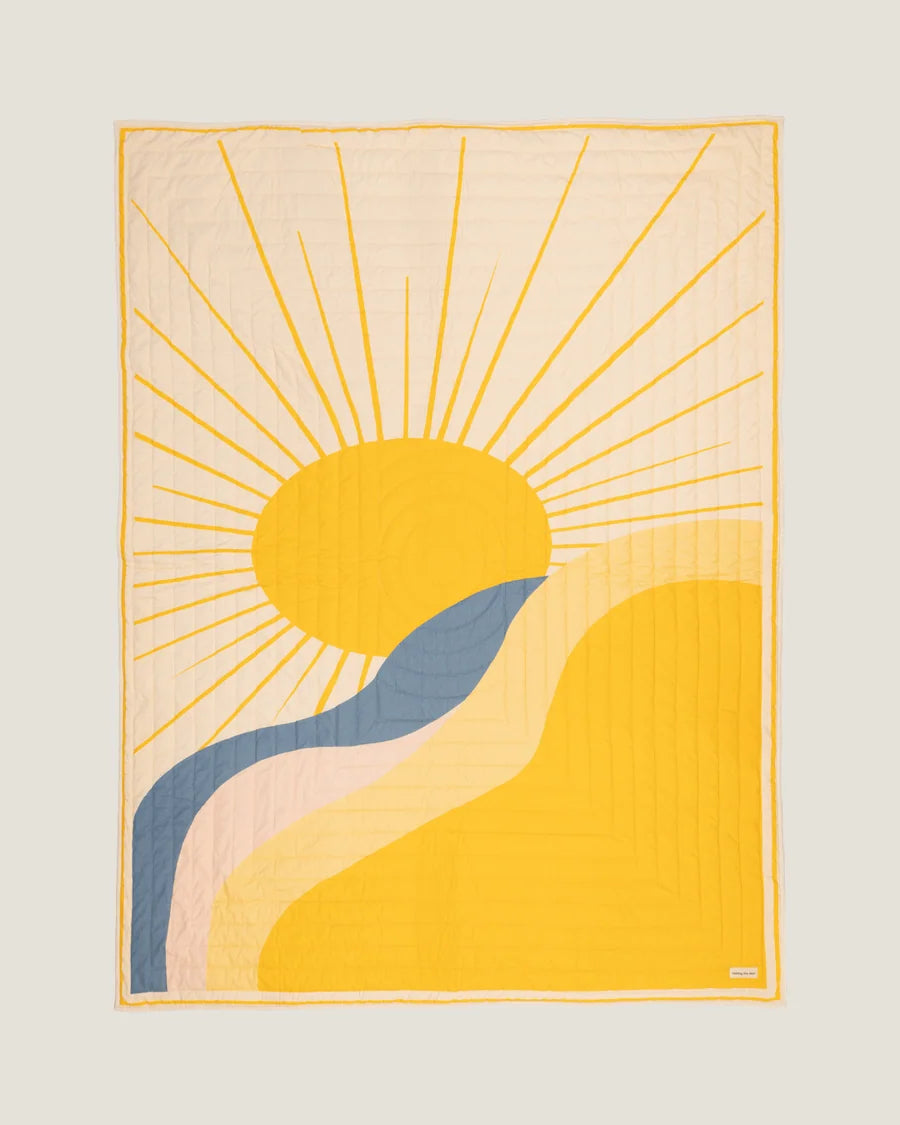
| Versatile quilts | Terra: a 100% organic cotton outer, lightweight pre-filled. Solara: 100% organic cotton with a soft cotton filling | Gentle warmth without bulk, under air conditioning that runs cold |
| Alpaca wool throws | Woven in Peru from ultra-soft alpaca and recycled wool, small batches, low-impact dyes | Lightweight, breathable warmth, folded at the foot for four in the morning |
| Sarongs | 100% TENCEL fibres sourced from Lenzing. Silky, breathable, temperature-regulating | A bed-end layer that leaves the house with you |

Fitted sheet. One flat cotton or bamboo cotton layer, the only thing you will sleep under for most of the season. Then a folded throw across the last third of the bed, ready to pull up without getting out to find it.

Where to start
If you are putting wool away for the season: store the alpaca properly, and replace it with one lightweight layer rather than three thin ones. Less to wash, and less to kick off at midnight.
The lighter organic cotton blankets and waffle weave throws carry a summer bed. The alpaca wool throws are what you fold away until autumn. We are a small team in Australia, and we ship worldwide, free, with duties and taxes included.
Then put a note in your calendar for the middle of the season. Open the cupboard, shake the wool out, fold it a different way, put it back.
Common questions
How often should I check on blankets while they are in storage?
Once mid-season is enough. Open the bag, shake the blanket out, look at the folds and the underside, then refold it along different lines and put it back. The point is not only inspection: moths prefer textiles that are never disturbed, so the act of unfolding is itself part of the protection.
Should I dry clean a wool blanket before storing it?
Only if it is genuinely soiled and the care label on your piece allows it. General practice with wool is that a few hours of airing outdoors in the shade does the job, and it avoids the mechanical and chemical stress of a clean. Store it clean and dry, not necessarily freshly washed.
Is it safe to store blankets in plastic tubs?
Only in a dry climate, and only with the blanket wrapped in cotton first and the tub kept off a concrete floor. Plastic does not breathe, so any moisture that goes in stays in. In humid, coastal or subtropical conditions, use a breathable cotton bag in a cool internal cupboard instead.
How long can a blanket stay in storage before it needs attention?
The folds are the weak point rather than the fibre. If something is going away for more than one season, refold it along different lines each year, or roll it instead. Permanent creases form where the same threads are compressed season after season.
Do I need to wash a blanket again when I take it out of storage?
Usually not. Hang it over a rail or a line in the shade for a few hours with air moving on both sides, and most faint cupboard smells go with it. Wash it only if the smell persists after airing and a round of bicarbonate of soda, and check the care label on your piece before you do.
More from the journal.
 bedding
 Buying guide
 alpaca blankets